
EU Border Modernization: Navigating the EES Bottleneck

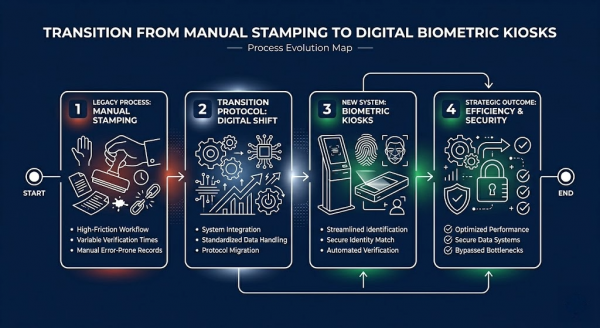
The EU’s implementation of the Entry/Exit System (EES) on April 10 signals a fundamental shift in trans-Atlantic mobility. For our private clients, this transition period poses significant risks to ground-side efficiency.
THE SIGNAL
Automated biometric verification is replacing manual passport stamping. Expect significant teething issues as airports integrate new digital kiosks at peak capacity.
THE STRATEGIC IMPLICATION
Infrastructure friction will likely disrupt premium fast-track services initially. Relying on standard fast-track lanes may prove insufficient during the transition phase.
TACTICAL PROTOCOL
- Pivot to private terminal (FBO) arrivals whenever possible to bypass standard customs hall saturation.
- Ensure all travel documents are digitized and cross-verified 72 hours prior to departure.
- Allocate a 90-minute buffer for ground transit post-arrival to account for potential biometric processing delays.
THE LONG VIEW
The digitization of borders is permanent. Within 24 months, we anticipate ‘pre-clearance’ protocols becoming the gold standard for global stakeholders, rendering current airport bottlenecks obsolete for those with the correct credentials.