
The Pivot Point: Why Executive Power Renders Traditional Travel Lobbying Inert

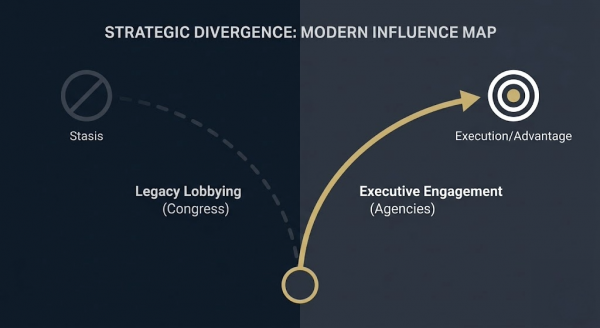
THE SIGNAL: The established US travel advocacy structure, designed for Congressional engagement, is fundamentally misaligned with the current regulatory reality where executive branch agencies command the most significant levers of power. This obsolescence creates regulatory blind spots and speed-of-light execution gaps for industry players.
THE STRATEGIC IMPLICATION: For private clients and consortiums requiring rapid movement on cross-jurisdictional permits, infrastructure access, or regulatory exemptions (critical for FIFA 2026 mobilization), traditional lobbying routes are delivering insufficient ROI. Capital must be redirected toward intelligence gathering and influence mapping focused squarely on the Executive offices and key regulatory bodies (e.g., DHS, DOT sub-agencies) rather than broad legislative pushes.
ENTITY ANALYSIS: This analysis primarily targets major advocacy bodies (e.g., US Travel Association, although not named, the analysis applies). The failure is structural, not asset-specific. This impacts all major operators reliant on federal clearances, from private aviation handlers to large-scale hospitality developers near federal land or infrastructure.
TACTICAL PROTOCOL:
- 1. Re-Map Influence Centers: Immediately task in-house intelligence to map key decision-makers within the relevant Executive Departments (not just Committee Chairs).
- 2. Friction Audit: Audit all pending or anticipated regulatory hurdles against this new Executive focus. Determine which are stalled due to infrastructural misalignment.
- 3. Direct Engagement Mandate: Mandate that external counsel shifts focus from ‘Lobbying’ budgets to ‘Executive Relations’ retainers for high-priority items.
- 4. Information Velocity Check: Assume internal advocacy groups are operating on a 6-12 month delay in recognizing this power shift. Create an independent, real-time monitoring channel for Executive Orders and high-level agency directives.
THE LONG VIEW: The future of high-level travel facilitation will be defined by hyper-specialized, agile intelligence units capable of navigating the ambiguity between legislative intent and executive execution. Legacy structures will collapse under the weight of regulatory speed.